
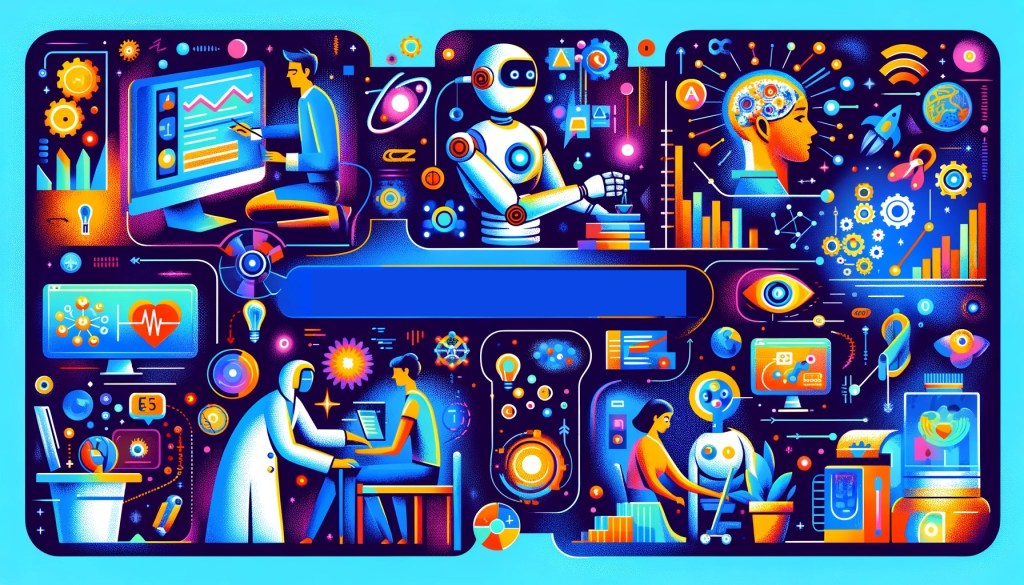
Artificial Intelligence (AI) has emerged as a creative force in the modern world, transforming industries and reshaping our daily lives. To truly understand and leverage AI, it is crucial to delve deep into its capabilities, applications, and future potential. Here are five comprehensive ways to deep dive into AI and become proficient in this revolutionary field.
1. Understand the Fundamentals of AI
Before diving into advanced topics, it is essential to build a solid foundation. AI encompasses a broad range of technologies, including machine learning, neural networks, natural language processing, and computer vision. Understanding these basics is critical to grasping how AI works and what it can achieve.
Machine Learning
Machine learning (ML) is a subset of AI that enables systems to learn and improve from experience without being explicitly programmed. It involves algorithms that can identify patterns and make decisions based on data. Key concepts in ML include supervised learning, unsupervised learning, and reinforcement learning.
Neural Networks
Neural networks are the backbone of many AI applications. Inspired by the human brain, these networks consist of interconnected nodes (neurons) that process and transmit information. Deep learning, a branch of neural networks, involves multiple layers of neurons, enabling the analysis of complex data and the creation of sophisticated models.
Natural Language Processing (NLP)
NLP allows machines to understand, interpret, and respond to human language. It powers applications like chatbots, language translation, and sentiment analysis. Understanding NLP is crucial for developing AI systems that can interact with users in a natural and intuitive manner.
Computer Vision
Computer vision enables machines to interpret and understand visual information from the world. It is used in applications such as image and video recognition, autonomous vehicles, and medical imaging. Mastery of computer vision is essential for AI practitioners working in fields that require visual data analysis.
2. Engage in Hands-On Projects
Theory alone is not enough to master AI. Engaging in hands-on projects allows you to apply theoretical knowledge to real-world problems, solidifying your understanding and honing your skills. Here are some project ideas to get you started:
Predictive Modeling
Create models that can predict future outcomes based on historical data. Examples include stock market predictions, weather forecasting, and sales forecasting. Use datasets available online to practice building and refining predictive models.
Chatbots
Develop chatbots that can interact with users and provide information or assistance. This project will help you understand NLP and the intricacies of human-machine interaction. Platforms like Google Dialog flow and Microsoft Bot Framework can be useful for building chatbots.
Image Classification
Build an image classification model that can identify objects within images. This project will enhance your understanding of computer vision and neural networks. Use datasets like CIFAR-10 or ImageNet to train and test your models.
Recommendation Systems
Design recommendation systems that can suggest products, movies, or music based on user preferences. This project will give you insights into machine learning algorithms and data analysis. Implementing recommendation systems will also help you understand how AI personalizes user experiences.
3. Stay Updated with the Latest Research and Trends
AI is a rapidly evolving field with continuous advancements and breakthroughs. Staying updated with the latest research and trends is crucial to remain at the forefront of AI innovation.
Research Papers and Journals
Read research papers from leading AI conferences such as NeurIPS, ICML, and CVPR. These papers provide insights into cutting-edge technologies and methodologies. Journals like the Journal of Artificial Intelligence Research (JAIR) and the IEEE Transactions on Neural Networks and Learning Systems are also valuable resources.
AI Blogs and Websites
Follow AI blogs and websites that provide news, tutorials, and discussions on the latest AI trends. Websites like Towards Data Science, AI Trends, and The Gradient offer a wealth of information on various AI topics.
Online Courses and Workshops
Enroll in online courses and workshops to stay updated with new tools and techniques. Platforms like Coursera, Udacity, and edX offer courses taught by AI experts. Participating in workshops and webinars can also provide hands-on experience with the latest AI technologies.
4. Collaborate with the AI Community
Collaboration is key to advancing your knowledge and skills in AI. Engaging with the AI community allows you to share ideas, receive feedback, and learn from others’ experiences.
Join AI Forums and Groups
Participate in AI forums and groups on platforms like Reddit, GitHub, and LinkedIn. These communities provide opportunities to discuss AI concepts, share projects, and seek advice from experienced practitioners.
Attend AI Conferences and Meetups
Attend AI conferences and meetups to network with professionals and researchers in the field. Events like NeurIPS, ICML, and local AI meetups offer valuable opportunities to learn about the latest advancements and collaborate on projects.
Contribute to Open-Source Projects
Contributing to open-source AI projects on platforms like GitHub can enhance your skills and visibility in the AI community. Collaborating on projects allows you to work with others, learn best practices, and contribute to the development of innovative AI solutions.
5. Explore the Ethical Implications of AI
As AI continues to advance, it is essential to consider its ethical implications. Understanding the ethical challenges associated with AI can help you develop responsible and fair AI systems.
Bias and Fairness
AI systems can inadvertently perpetuate biases present in the data they are trained on. Ensuring fairness involves identifying and mitigating biases in AI models. Techniques such as bias detection, fairness-aware algorithms, and diverse training datasets are crucial for developing equitable AI solutions.
Privacy and Security
AI systems often handle sensitive data, raising concerns about privacy and security. Implementing robust data protection measures and complying with regulations like GDPR are essential to safeguard user information. Understanding the balance between data utility and privacy is critical for responsible AI development.
Transparency and Accountability
Transparency in AI involves making AI systems understandable and explainable to users. Ensuring accountability means that AI developers and users are responsible for the outcomes of AI systems. Techniques like explainable AI (XAI) and ethical guidelines are essential for maintaining trust in AI technologies.
AI is a transformative force that has the potential to reshape our world. By understanding its fundamentals, engaging in hands-on projects, staying updated with the latest research, collaborating with the AI community, and exploring its ethical implications, you can deep dive into AI and become a proficient practitioner in this dynamic field.
 J. A. Méndez Authors Page and Blog