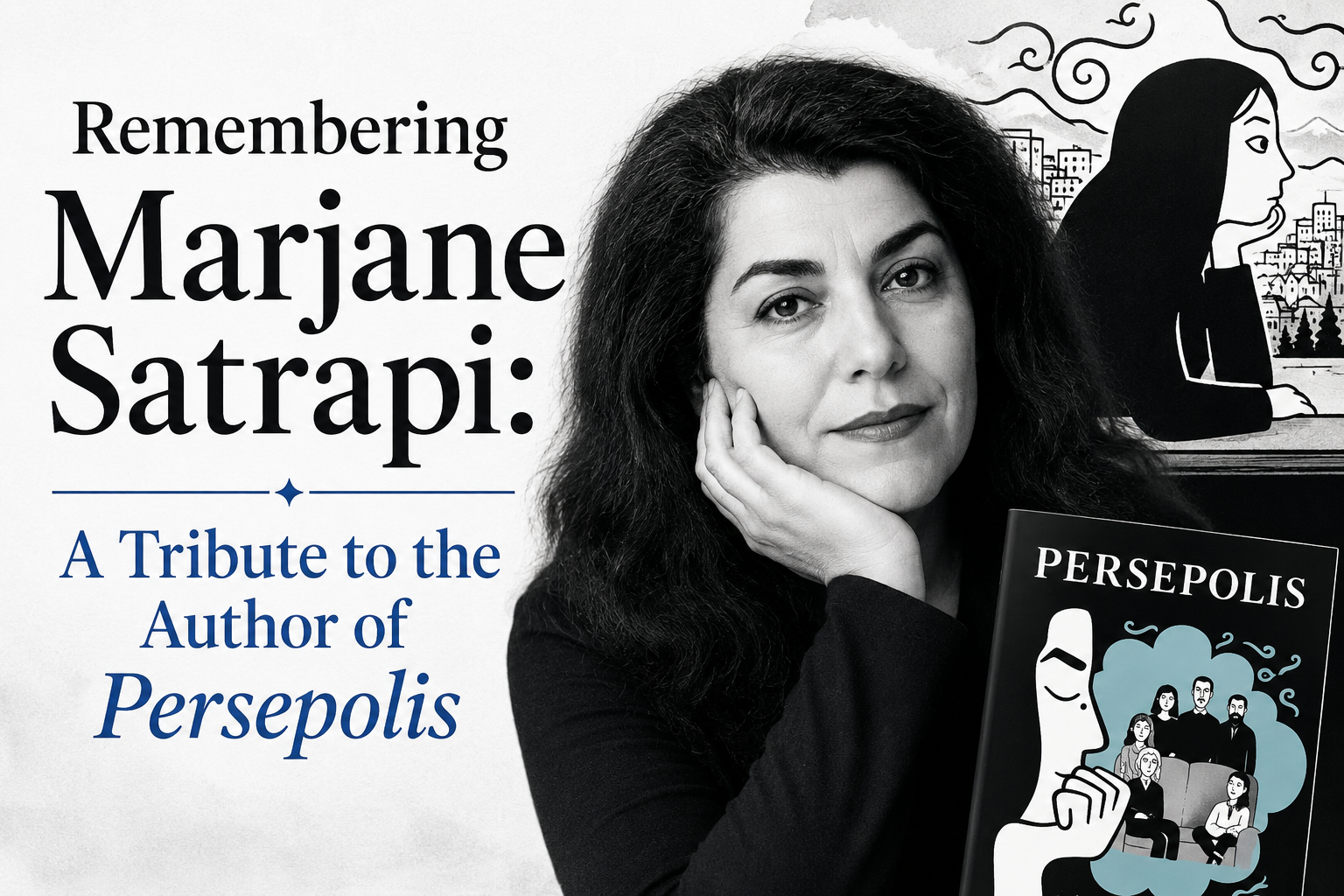


When I learned of Marjane Satrapi’s death, I couldn’t believe it. I felt it the way you feel the loss of a close friend or a member of your own family — because I knew her. I really did know her.
I had felt her pain, shared her laughter, and understood her struggle. I couldn’t imagine anyone who could write the way she did. She wrote as a child when she was a child in her story, as an adolescent when she was an adolescent, and as a young adult when she was that. The voice grew up on the page exactly as she had.
When I read that she had died “of sadness,” just over a year after losing her husband, Mattias Ripa, the love of her life, I understood how that could be true for a heart like hers. The kind of love she must have felt had to be that intense. As a writer, I know how hard it is to put yourself into words — that to truly transmit a feeling, you must involve your whole heart in it. She always did.
Reading Persepolis in French
I read Persepolis in French. My French, at the time, was about the level of a child’s — and still, I understood all of her passion and dedication in telling her story through this extraordinary graphic novel. It’s a book I will always recommend to anyone who wants to understand a human perspective on Iran’s history, not just the headlines. I’m certain that if I read it again now, with a deeper grasp of the language, it would be a completely different experience. Great books do that: they wait for you to grow into them.
After I heard the news, I talked about her death with my wife. I was so emotional that I wanted her to feel the same grief I did — to understand that this loss was real, even for someone I had never met. There are feelings that are almost impossible to explain in words, the kind only poets seem able to name. But I digress.
Persepolis Lives
Here is what I keep coming back to: this is not really an ending. Persepolis lives. Satrapi will keep going in our minds, but also in our hearts — because what we hold in our thoughts becomes part of our reality, and she exists as long as we remember her.
She changed my life. She made me more willing to be vulnerable. She understood pain without judging it, as if she never wanted to pass hatred on to anyone else. There’s a quality in her work that so many of us recognize from our own worst moments — the feeling of not understanding why something happened, of asking why and then simply continuing, moving forward through this illusion we also call life.
And so, I sit with both feelings at once: I struggle to understand why she’s gone, and at the same time I understand it completely. Satrapi changed who I am, and I can’t go back to being the person I was before I read Persepolis — and I wouldn’t want to. Persepolis changed everything about me. It certainly did.
Marjane Satrapi will always live in Persepolis, and Persepolis will always live in me.
Thank you for writing your story, wherever you are right now.
Did you enjoy this post? If you found it helpful:
- Like it.
- Leave a comment.
Follow me on X: @jamendezr89 or on Instagram: @ontheside89.
Subscribe to the blog to receive new posts and essays directly in your inbox.